
Trace Former Preston County Owners
The best entry point is the newest deed matching the parcel's legal description. Every deed you find hands you a new grantor. Search that name as a grantee in an earlier book, and the chain grows. The county's public Document Inquiry page does not state how far back it reaches, and the Assessor's historical card and land-book services publish no full year runs either. Treat the coverage table as a routing map. It flags what each custodian can confirm and what still needs a direct question.
| Source | Years It Covers | Where Held | What It Shows |
|---|---|---|---|
| Clerk Document Inquiry | Online start year not stated | County Clerk portal and courthouse | Recorded parties and instruments; inspect live fields |
| Deed books and indexes | County formed in 1818; exact runs unverified | Clerk counter / vault and possible microfilm | Older conveyances and grantor/grantee references |
| Assessor land books | Current and historical scans; years not listed | Assessor Land Book Viewer | Tax-roll owner and assessment history |
| Map cards and plats | Current/historical card years not listed | Assessor viewer; recorded plats at Clerk | Parcel identity, map history, lot and tract clues |
| WVU maps and history | Maps dated 1976-1980; history series spans late 1700s-1900s | Regional History Center finding aid | Context and map references, not title proof |
The Preston County Clerk Document Inquiry is the online recorded-document entry.
The County Clerk’s document inquiry provides the online starting point for a recorded deed search.
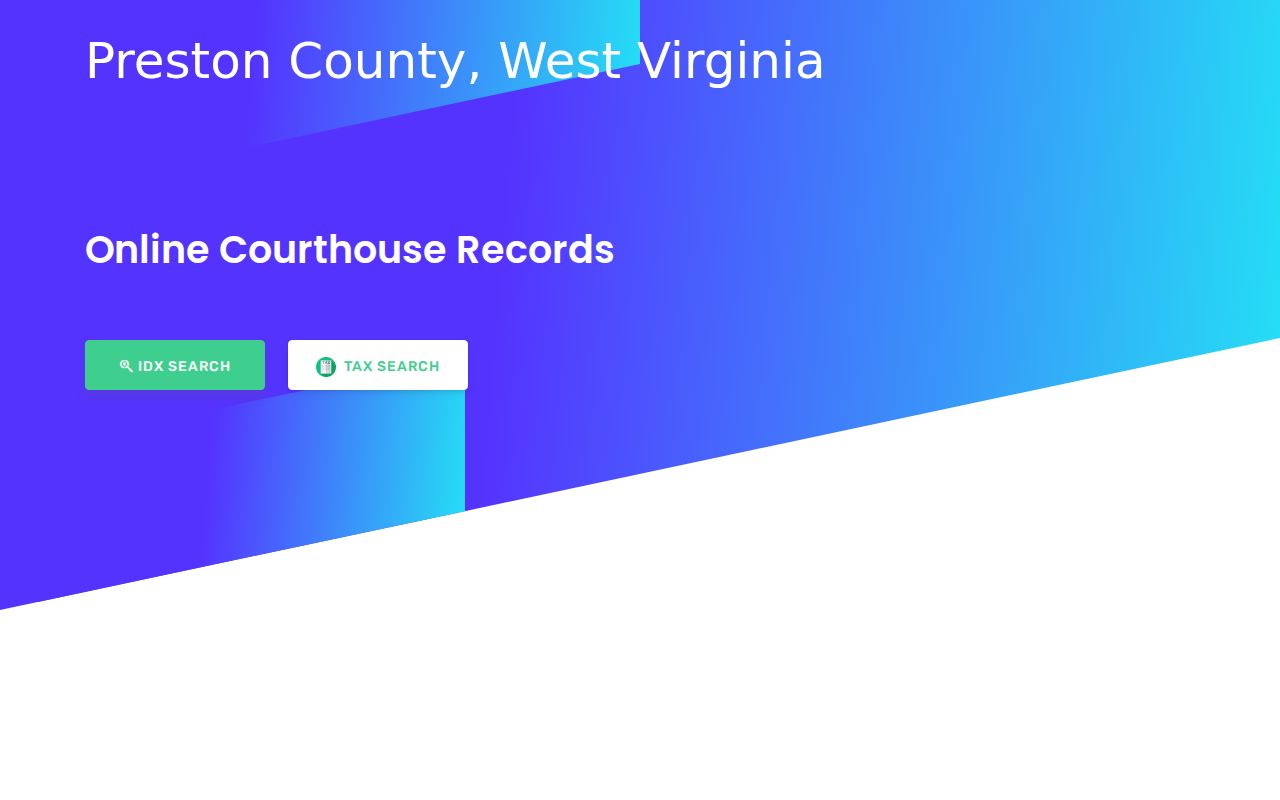
The Clerk's online inquiry serves recent recorded instruments well. For older transfers, ask the Clerk three things. Where does the online index end? Is there a deed-book index for earlier years? What microfilm or archive path exists? The Assessor's land book and map card can supply an earlier parcel key or roll owner, which then points back into the deed records. Old maps and community timelines help decode place names. They prove nothing about ownership on their own.
Walk the Preston County Deed Chain
Always walk the deed chain from newest to oldest. The latest grantee gives you your starting name. The grantor on that deed becomes your next search target. Compare legal descriptions at every step, because parcels get divided, combined, or described by a road or neighbor instead of a modern address. Keep a chain sheet with the recording date, deed type, parties, book and page or instrument number, and the exact land wording. That discipline keeps the chain intact when names collide.
- Find the newest recorded deed for the parcel and note its grantee and legal description.
- Search the grantor as a grantee in the earlier index and compare land wording.
- Repeat with each matching conveyance, allowing for estates, trusts, trustees, and alternate spellings.
- When the online index stops, request the relevant older deed books and indexes from the Clerk.
- Grantor / grantee
- The party conveying / receiving an interest in an instrument.
- Chain of title
- The linked sequence of conveyances for the same land.
- Legal description
- The deed’s tract wording, which can persist when a street address changes.
- Book and page
- A volume reference used to retrieve a recorded instrument; keep it with the parties.
Preston County Former Owner Place Names
Terra Alta shows why a modern city label can hide a former owner. The town was chartered first as Portland. Local history also uses Cranberry before the 1890 incorporation. Cranberry Summit appears as another early name. An old deed, newspaper, directory, or plat may carry any of those names. Record each version beside the party name and parcel description. Then confirm the land itself matches, not just the place name. The Town of Terra Alta's official site documents the name and incorporation history.
Terra Alta’s official town source documents its earlier local names.
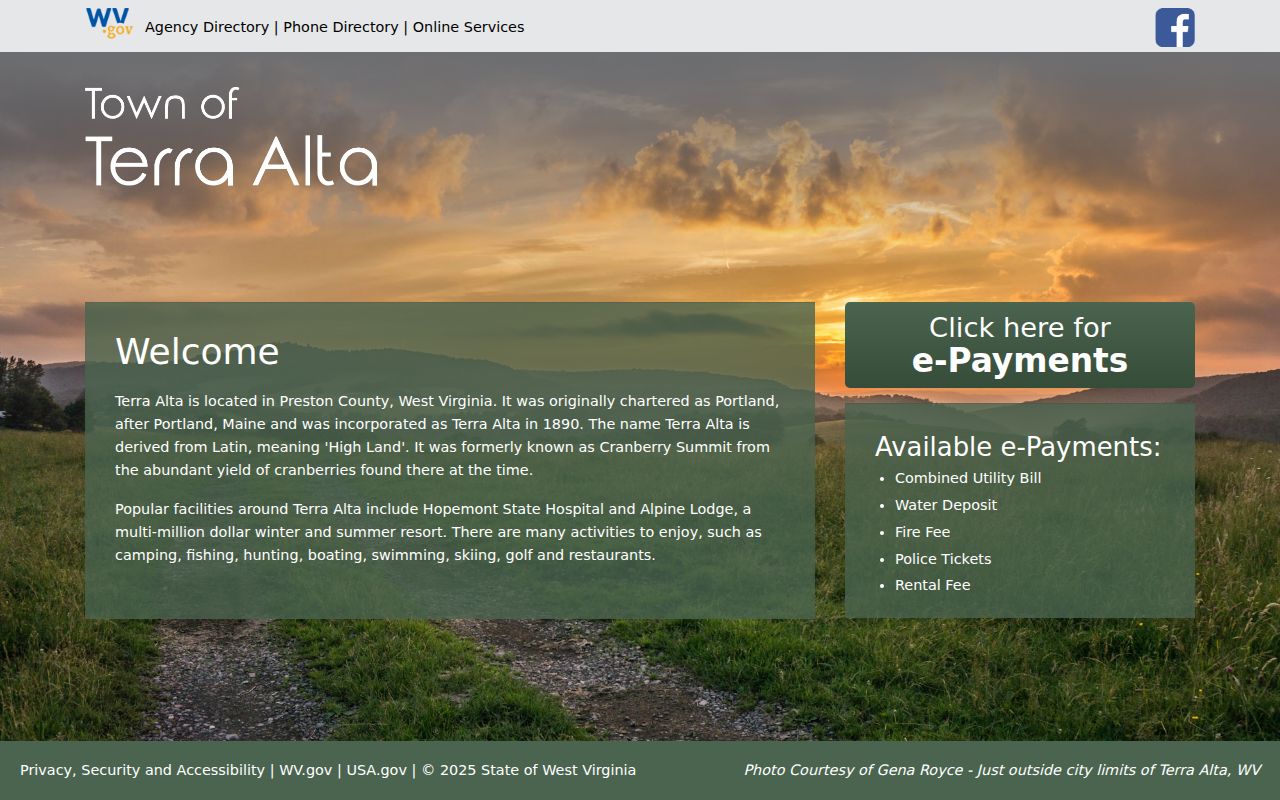
Treat former place names as search variants only, never as proof that two deeds describe the same parcel.
Preston County Former Owner Map Cards
Older deeds sometimes carry a tax-map number that no longer appears in current results. The Assessor's history can bridge that gap. Its Map Card Viewer covers current and historical cards, searchable by district, map, and parcel. The public page does not state the year range. A card may preserve an earlier owner entry, acreage, sketch, or classification. That detail can point to the next deed reference. The Preston County Map Card Viewer is the scan entry point.
The Assessor’s online service links readers to current and historical map cards.
Check the card's date against the deed. Note both old and current parcel keys. The card gives tax history. The recorded instrument proves the transfer.
The Land Book Viewer offers District, Year, and Page controls. The public page does not post the exact year run. Ask the Assessor which years exist if the old tax-roll entry is not online. The Assessor's Land Book Viewer is a separate historical assessment path.
The land-book viewer uses district, year, and page to find a historical volume.
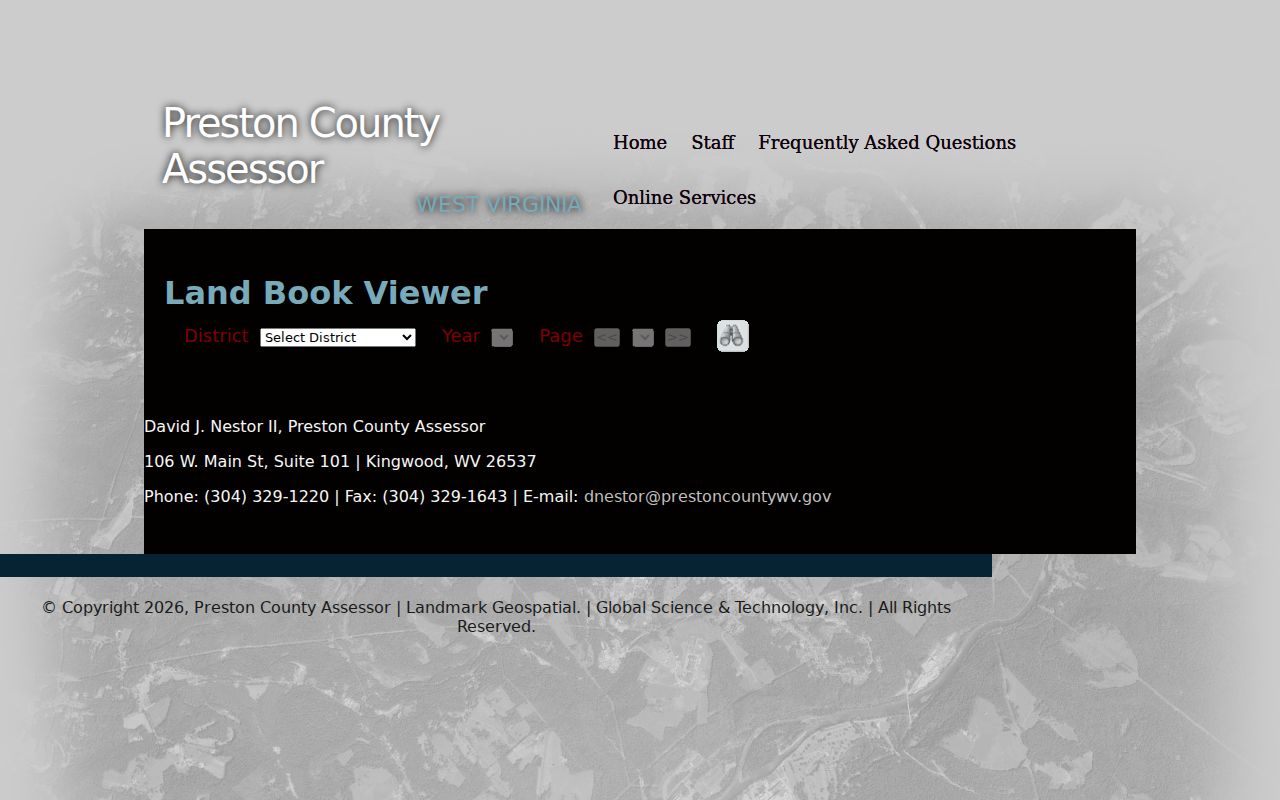
Use the scans to recover a former tax-roll name or parcel clue. Then return to the deed index for the true ownership chain.
Preston County Deed Estate Transfers
Estates break simple person-to-person chains. The Assessor may list a decedent, personal representative, trust, or heir. The deed may show an executor or administrator acting under probate authority. Search the Preston County Clerk's Probate and Estate Administration records by decedent, executor, or administrator. Then tie the appointment or order to the recorded executor's deed. The county page publishes no probate index fields, coverage, or copy fees. Ask at the Clerk's counter.
A will, appointment, inventory, or death certificate explains the people and their authority. The recorded conveyance or controlling order still supplies the land link. West Virginia Vital Registration opens birth records after 100 years. Most death, marriage, fetal-death, and divorce records open after 50 years. Limits apply to protected information. A state certificate is never itself a property transfer.
Pair every estate record with the legal description and deed date. If the parcel passed through several heirs or a trust, search each fiduciary name too.
Preston County Former Owner Clues
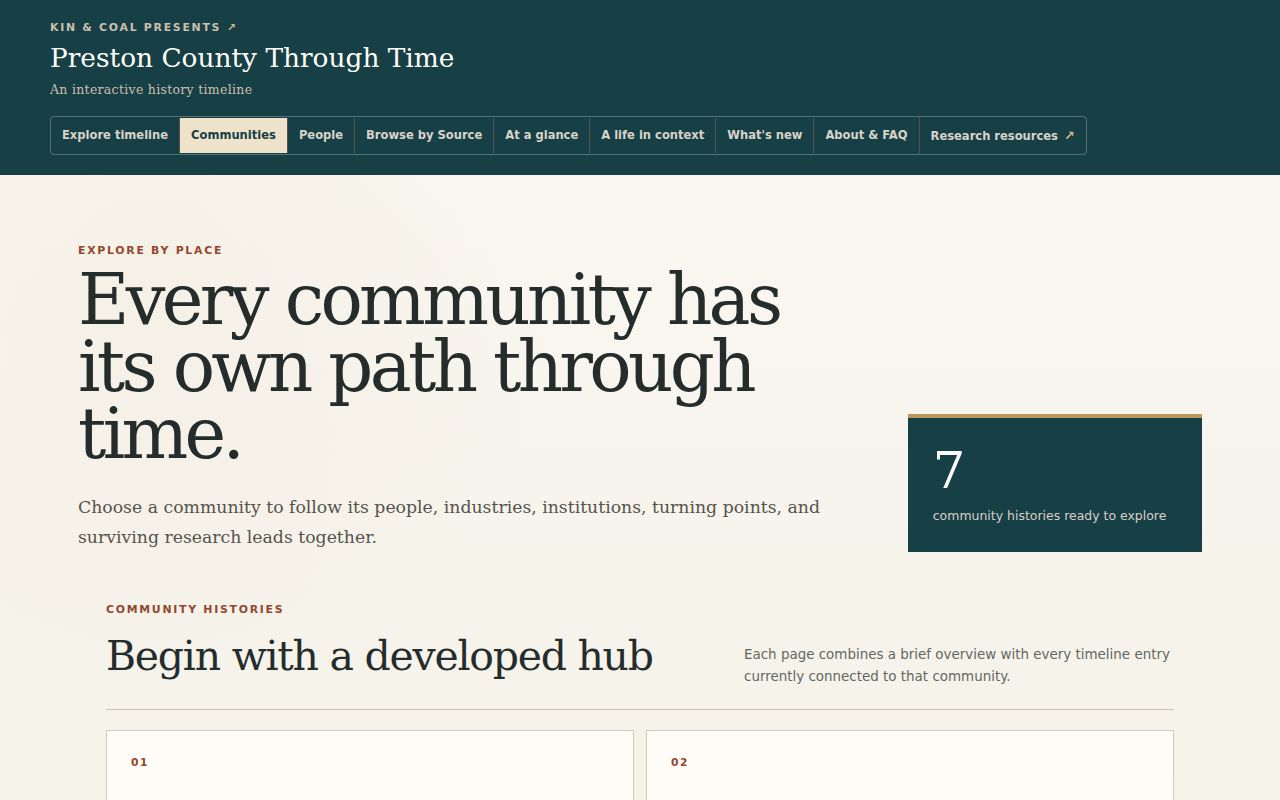
Preston County was formed in 1818 from Monongalia County. Old property descriptions often mention roads, stations, churches, or towns. The names have often since faded. Local-history chronologies help decode them. The county-history project traces Kingwood’s town-site story to 1797. Terra Alta’s settlement dates to 1853. Masontown’s town layout goes back to 1856. Treat those dates as context only. They are not deed dates and prove nothing about a specific owner of record. The Preston County Through Time community timeline can suggest name spellings to try. It pairs well with grantor and grantee variants in the deed records.
The county community-history index can help recognize former place names in an older chain.
Turn a historical clue into a better search term. Then return to the Clerk’s deed and plat records for the actual property relationship.
Preston County Deed-Book Fallback
When an online name search stalls, ask the County Clerk for the right next step. That might be a grantor index, grantee index, deed book, plat volume, microfilm reel, or an archive reference. Bring useful details with you. Staff work best with the latest grantee, the prior grantor, legal-description terms, parcel components, an approximate date, and any known book and page. Try name variants separately. One spelling is rarely the only path to a parcel record.
The courthouse counter sits at 106 W. Main Street, Suite 103, Kingwood; call 304-329-0070 or email PCClerk@PrestonCountyWV.gov. The public Document Inquiry page notes a minimum $2 card convenience charge. It lists no deed-copy or certification prices. Ask which copy type you need and the current cost before requesting a document.
How Far Back Preston County Records Reach
The Clerk’s public landing page states no start year for the online deed index. Preston County’s deed-book history begins with county records after formation in 1818. The exact volume runs and earliest searchable names must be confirmed at the counter. So avoid promising a year cutoff. Do not claim every nineteenth-century instrument is online. Ask the Clerk about older books. Ask about grantor and grantee indexes, microfilm, or the state archive covering your date.
The Assessor’s current and historical card scans and land books offer a bridge across the years. They form a tax-roll bridge for tracking owners over time. The WVU Regional History Center finding aid documents county maps from 1976–1980. It also documents broader history material. Local directories, newspapers, and cemetery sources add context, though their Preston collection years are unconfirmed. Label each source for what it actually shows. It may be a deed, a tax bill entry, or a plat.
Lawful use. Former-owner research is for property history and title diligence. Do not use names or addresses to track, harass, intimidate, or harm a living person.
For today’s owner-of-record field, use the current Preston County owner record. For a single instrument and its copying options, consult the County Clerk deed-record process.